Sunday, February 27, 2011

Wildlife Photography: Tips to Learn the Basics of Wildlife Photography


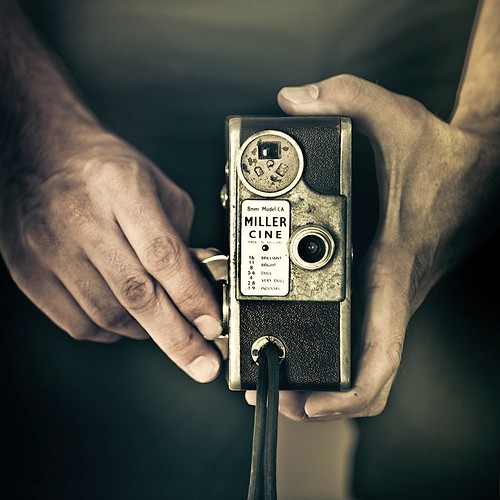
Cuba Gallery: Retro / vintage / camera / hands / photography by ►CubaGallery


Photo Credit: celtics baby clothes


If you really want to learn the art of wildlife photography, then you should be aware of the basics of wildlife photography. It is rightly said that wildlife photography is one of the most challenging but rewarding hobby or career. It takes honest practice, persistence and hard work to master the real art of wildlife photography.

For mastering wildlife photography you have to have the basic knowledge of camera handling. As majority of the photos you take will be captured with the help of telephoto lens. This will test your patience and dedication as you have to wait a much longer time for the animal to come in the range and taking right pictures through right angles before that wild animal leaves from the site. Many of the times the animals you want to shoot will be yards away from you so that you have to take your pictures with more precision and care with zoom lenses.

While shooting wildlife you always have to watch out for minute movements happening around you. And for that purpose you have to be attentive for the longer time. The sunlight also plays a very important role in taking these wildlife pictures. For this purpose your camera should have the proper adjustments according to the various angles of sunlight so that pictures will be much clearer without any fuzz.

Also wildlife photography is all about capturing a particular moment of the wildlife. It makes or breaks your photography style. Many of the best wildlife photographers out there are really skillful in shooting the exact speed and momentum of the particular animal they are watching. But to be the best wildlife photographer out there you should first master the basics and you can begin this process by starting to shoot your own home pets. If you learn to shoot their natural movements and habits in their natural style then you can say that you are ready for outdoor wildlife photography.

There are no shortcuts to learn the basics of wildlife photography. Rather you have to practice it religiously and with full devotion. You should have to pay a special attention to your cameras. You have to take care that your camera has a quick shutter speed which is very necessary to take more than one shot as you roam around the wildlife to take pictures. In this type of photography most of the times you have to follow your subject to shoot many pictures at a time in one shot. This process is mainly known as "panning" which consists of taking faster pictures in one snap as you mover closer to a particular animal you want to shoot.

Thus wildlife photography is all about your patience, persistence and shooting skill where you need to wait a longer time to take the perfect picture. But at the end of the day it is also the most satisfying art where you get the really thrilling and enjoyable experience to cherish for.

Whoever Said a Picture is Worth a Thousand Words Probably Didn't Use Positive Images Photography


Edinburgh Photography, Double Yellow by John Gilchrist


photo source


Well I've come to terms with the fact I'm no Denzel Washington... and I'm okay with that. All I really wanted to do was to take some good quality pictures I could use as profile headshots for my internet businesses and for my business cards, brochures, etc. This was important since I had a deadline coming up that I needed pictures for.

Based on my photography needs, I had wondered was there a photographer where the average looking person can go to get reasonably priced, almost "Star Quality" pictures taken. Also, I preferred that they were local too because I wanted a photographer that I could do business with again on future projects. Just imagine my delight when I found out that there was such a photographer located in Oakland at Positive Images Photography.

The owner is Gisele Bonds (no relation to Barry) and she not only consulted with me on the objectives of my project, she also happened to be a pleasure to talk to. She is very knowledgable. She definitely won points when she suggested that I go home to retrieve a few darker outfits to round out my photoshoot after I mistakenly arrived with all lighter colored outfits. She then explained why and how the darker colored outfits could be used to my advantage in the photoshoot.

As we took pictures she instructed me to pose at various angles and again she told me why those angles were important based on the numerous ways we discussed I could to utilize those pictures in my marketing mix. For instance, some of my pictures were taken with my business' branding in mind so that my company's logo or other images could be easily incorporated into those pictures. Nice!

For someone who's camera shy, I can honestly say I did enjoy Gisele's professionalism and creativity. After what felt to me like a thousand pictures and almost an eternity, we finally finished! At that point my mind started thinking, I hope these pictures look okay. I have to admit, I felt a little self-concious about the prospect of seeing the finished product because I have like many people, facial blemishes. When I mentioned this concern to Gisele she said not to worrry the pictures are going to look good.

Gisele invited me to come in and take a look at all the pictures we took and choose the ones I wanted. She gave me some positive feedback that was helpful and then I selected my favorites.

Later, when I received my Picture Disc I was happy to see that she was so right, my pictures did look good and my facial blemishes were gone... at least in my pictures! Interestingly, I'm told her specialty is working with high school aged students. Her studio is filled with with a plethora of graduation and prom pictures, etc.

She mentors students by providing intern opportunities at her studio and one of her past interns who is in college currently, still works at the studio which to me says alot about the kind of person Gisele is. I think that Positive Images Photography is aptly named and if you're looking for high quality photos, Gisele is the person you need to see. You may soon find that your pictures will be worth much more than a thousand words if you do!

Saturday, February 26, 2011

Amazing Secrets of Underwater Photography


Cuba Gallery: Street photography by ►CubaGallery


credit,credit


Do you like underwater photography? Do you want to know how it is done and what are the different things you should look out for when taking underwater pictures? Then you have come to the right place to learn what really underwater photography is. We all know that underwater photography can be a great fun and enjoyment activity and it can be more enjoyable experience for you if you really know all the nitty-gritty about underwater photography.

If you want to take beautiful underwater pictures then most importantly you should have a powerful digital camera which can work underwater without any hassles. Because it is not like that you go underwater and immediately start taking pictures. Rather you have to take care of many things when taking pictures in the deep water. If you do not take enough care then your pictures can become blurred and quality can be compromised. You should always look out for the direction of the sunlight underwater as sunlight travels differently in the deep water which affects the picture quality. You have to adjust your camera angle properly with the direction of the sunlight when you are underwater.

Then there is the impurity in the ocean water like mud and dirt which can really affect the picture quality underwater. This dirt can make the water so impure that you can not see properly in the deep water. But this happens most of the times only in the lakes and rivers. But many of the oceans are so clear and pure that you can see longer distance without any problems and your pictures most of the times comes as a quality product.

Many people who try underwater photography; takes their own friend's and families pictures and this can be more entertaining and really memorable experience for the family members to cheer for long time. But one of the most important factor every underwater photographer should remember is that the underwater currents and their effects. It is the most unpredictable factor which really affects our picture quality when you are underwater. When you are underwater it is extremely difficult for everybody to stand still in the same pose. And with the dynamic nature of underwater currents it becomes more difficult to give the still pose for the photo. So you should always keep in mind the direction of the underwater currents while taking pictures.

With the advancement of different types of digital cameras it will become easier in the future for us to take underwater pictures and really enjoy the experience of underwater photography.

Using Depth of Field for Photography


Cuba Gallery: Fork / wood / background texture / water / photography by ►CubaGallery


credit


It's one of the greatest tools available to photographers, it's easy to use, and yet it's among the least known and used abilities of a camera today. Pro photographers have used it for decades, but the amateur can use these same techniques without paying the professional price. It's called depth of field, and it's accessed through the use of the aperture.

The aperture, simply put, is the hole that light comes through in your camera. Light passes through the front of the lens, through a series of glass pieces, through a hole at the back of the lens, and into the camera. The aperture is the hole in the back of the lens, and you get to control this vital part of the camera, if you decide to want to bump up your pictures. You can place the camera on auto, and the camera will adjust its aperture, shutter and more to the situation it sees. By placing the camera in more manual modes, you take on powerful and personal control, and YOU get to decide what you want to create with your photographs.

An important factor here is lighting. Any photography relies heavily on the lighting that you are using, whether it be from the natural, ambient light around you, or artificial light, like a strobe or other flash unit. Especially while using natural light, it will be important to use a tripod to keep the camera steady while shooting. If you are shooting on a cloudy day, without much light, then the camera must compensate for less light by having a longer shutter speed, which it will do automatically in the mode I'll be explaining in a moment. A longer shutter speed means the camera won't be able to have a clearly focused picture without the use of the tripod.

Depth of field simply means the area of focus, or the area in the picture that is in focus might be a more accurate term. Photography is a two dimensional medium, having height and width, but it lacks depth, the third dimension. Your photography can create the illusion of that depth through a few easy camera settings. You may be asking yourself, why would I want to create the illusion of depth, and what is it good for? Part of the reason is to create a sense of emphasis. When you take a picture of a large area, with trees, birds, squirrels, people, rocks, etc, what is the thing or object that you are zeroing in on? Is there anything that you really want to emphasize to your viewer? If so, it's probably getting lost in the crowd of other things on the scene. The squirrels are so small you can barely see them, the people are walking their dogs, and the trees are swaying in the breeze. But what if you wanted to focus on the viewer on the flowers in the garden? When you create emphasis on an object, it strengthens your photo, and actually guides the eye of the viewer to that object. You could take pictures to create a story about that, as you can read in my article about photo stories. When you get in to take close-ups of the flowers is where the possibilities of great photography begin.

Emphasize the garden by focusing in on one or two flowers at a time. Grab a tripod, get down to eye level with them, and then get ready. Place your camera in a mode that allows you to change your aperture; the mode is usually called "A", or "AV" on some models. Film cameras can allow these changes too, on SLR models. They require you to simply change the f-stop manually on the aperture ring. On your digital camera, use your selector buttons to change your aperture. You'll see on your digital camera, most likely, a letter f, with the number on the readout on either the monitor, or the info panel on the top of the camera, or perhaps both areas. The f means f-stop, which is the name commonly used to describe the number of the aperture setting. The best way to emphasize a flower is to have only that flower in focus, and to have the rest out of focus. Change your aperture to a really low number, such as 2.8, 4, or 5.6. When the lens is at a low number like this, the lens hole is wide open, but it is creating a small area or depth of field; basically an inch or two will be in focus. Focus your camera, and shoot. Now, look at the camera, and look at your pictures. The one or two flowers should be in focus, but do you see how the background is fuzzy and out of focus? This is what is called a "shallow depth of field", and that comes from using a small number f-stop. That's because you've taken control of your camera, and changed the outcome! Because only the flower is in focus, and the rest is blurred out, you have guided your viewer to what YOU want to emphasize! You have used one of the most powerful tools available for a photographer to bring a new focus to your pictures. Try this with a lot of different scenes; look how the item is forced to really stand out for you because it's the only thing in focus.

Now, on the opposite end of the spectrum are the pictures that have the entire photograph in focus; such as a lighthouse standing out from the beach, with horseshoe crab shells in the immediate foreground. This is also done by changing the depth of field of your camera. Here, you again change your aperture, but this time place it on a high number like 16, 22, 28, etc. This is to create a large depth of field by using a small hole in the back of the lens. Again, you must use a tripod to keep the camera steady. Take a picture with something in the near foreground, such as a rock or the crab shells, and then compose your picture with a mountain or some other object some distance away, focus, and shoot. Remember to use the rule of thirds here for additional emphasis. As you'll see, both areas should be in focus, again showing the third dimension and creating the illusion of depth. This is a large depth of field.

It's a little known tool in the photographer's toolbox, but almost any camera made in the past four years will have some sort of ability to work with depth of field, whether they have a point and shoot or DSLR. Every photographer, of every level, has the ability, through practice, to create beautiful photographs that can rival those of the pros, by using the tools available with every camera. Use the strength of depth of field when you create the third dimension in your photographs, and add a new and incredibly
powerful personal dimension to your photography.