The small, but active Independent film scene in Eugene, OR seems to be growing at the same pace as the bustling city itself. Even with a population of fewer than 150,000, Eugene is no stranger to the movies. The block buster comedy “Animal House” was shot at the University of Oregon campus, the Eugene celebration has just started the Best Film Festival to help showcase Oregon’s film industry, and the Bijou Art Cinemas continues to play fresh creative films on a daily basis. More activity is on the way.
The Oregon Screenwriters Group calls Eugene their home and meets at Eweb every month to share creative film works and help each other. Many of their members are film and television industry professionals who can offer invaluable help to newcomers. Their membership is free and open to anyone from writers, actors, actresses, filmmakers, producer, directors, camera folk, grips, to “Shakespeare’s ghost”. They are even working on organizing another Eugene Film Festival. Meetings are held the last Sunday of each month from 6-8pm and always at EWEB address: 500 East 4th Avenue Eugene. The Eugene Film Festival planning meetings are every other Thursday at 8:30 at EWEB, beginning Sept. 8th. Get involved!
The Eugene Celebration in 2005 will kick off the first annual Best of the Best Film Festival at the McDonald Theatre, 1010 Willamette St., in downtown Eugene. It’s goal is to showcase Oregon’s booming independent film industry and shed light on other exciting Oregon film festivals. Many different film genres and styles from animated shorts to full length features will be presented. The website to check out to stay up on all the latest happenings in independent film throughout Eugene would be the Eugene Indie. Other publication which would include festival information and screening would include the Eugene weekly, See the resources section for their websites and contact information.
If you want see the latest independent films all year round check out the Bijou Art Cinemas, an independent movie theater located between Mill and Ferry Streets, four blocks west of the University of Oregon campus. The “Spanish Mission” style building has been around since 1925, when it was designed by the first dean of of the U of O school of architecture. Besides showing film daily the Bijous is available for private movie screenings or celebrations. It has also been known to support local productions.
Wednesday, March 16, 2011
The Independent Film Scene in Eugene, Oregon

Creative Garden Art: From Trinkets to Treasures
Did you know that you can give new life to nearly any old object? Not only can these ‘recycled items’ add unique charm to your home, but they also be incorporated into the garden. With just a little bit of imagination and a lot of creativity, an ordinary garden can be given the ultimate makeover—one full of character and history. Objects for this task can be found just about anywhere. You can even make use of your own personal possessions that you may have found difficult to part with in the past.
In the garden there is a place for everything, especially containers. Some of the most commonly reused objects that can easily be transformed into interesting containers include plastic jugs, old pots and pans, baskets, and tires. You can also use an old wash tub, sink, or wheelbarrow. For a more personal touch, consider recycling a pair of outgrown boots that were once yours or perhaps belonged to your children. As long as your object allows for drainage, nearly anything goes. For items without drainage holes, simply poke a few in the side or bottom with a drill or other suitable instrument. Don’t get rid of those aged flowerpots; give them a face lift instead by adding some paint or mosaic tiles.
Plastic soda bottles can turn into unique ‘piggy’ planters. Simply cut a section out of the side to hold a small pot. On the other side, add some feet; this will also give the planter support. Typically, I use an egg carton for this; you may use whatever is on hand. Choose your favorite color and paint the bottle. Add some eyes and ears; the nose comes from the bottle’s lid. Now place a flowerpot into your ‘piggy’ planter and set it in a location of your choosing.
What is a garden without interesting focal points? Large objects make great eyepieces. Wheelbarrows, tubs, old mowers, and statues are some good choices. Fountains and other water features can easily be made from old objects that have just been lying around. Use pieces of pipe, old sinks and tubs, or different sized pots and pans. Welcome birds into the garden with creative sanctuaries. Turn an old mailbox into a festive bird retreat or feeder. Transform dishes into splashing bird baths. Worn-out tools and other similar items can quickly become treasured garden pets. For instance, post-hole diggers can be changed into magnificent alligators. Flowerpots can magically be transformed into cute puppy dogs. Turn saw blades into artificial flowers with some paint; attach to stems made from pipes or broken tool handles. Maybe you would prefer to create sundials from the blades. It’s totally up to you.
Everyone enjoys the whimsical sounds of wind chimes, and these can easily be made from various scrap metal parts. Wind sounders can also be created from strips of metal and twisted into shape. If you have an excessive supply of glass canning jars, drop some tea light candles into them and line walkways or even a deck to add subtle light for get-togethers. Old coffee, soup, or paint cans may be used as well. Simply punch decorative designs into them, add some paint, place a candle inside, and enjoy. Stones and weathered stumps or logs even have potential in the garden. When uniquely placed, these objects can provide additional interest throughout the garden area. Do you like collecting things? Integrate them into the garden. For instance, a collection of bottles or sea shells can be utilized as edging for beds. Ladders, gates, or bed frames can make an attractive trellis for your plants. Dishes can be used in place of mosaic tiles for decorating a variety of objects.
No matter your level of artistic ability or skill, art is art. With any type of art, there is no right or wrong. Objects of all sorts can hold hidden potential. Whatever you see in an object, you can do. All you need is some creativity; as imaginations are never-ending, so are the possibilities.
Anglin's Wedding Photography in Bend Oregon

here
Anglin’s Wedding Photography will preserve your wedding memories with their exceptional and incomparable talents. Jake and Shereen Anglin can create beauty on film that will last a lifetime! Together, they capture the sentiment of a couple’s once in a lifetime event, their wedding day. Anglin’s portraits are incredibly intimate and share a level unlike any other wedding photographers endeavors.
The level of intimacy captured and preserved on film between the bride and groom is unsurpassed and enduring. While viewing Anglin’s sample portraits from their website www.Anglins.com, you can almost feel the emotional and intimate nature of the wedding with the soft focus and moody lighting the Anglins use. For any couple, their wedding day can be the most anxious and exciting day of their lifetime together. Photographs of this moment should be intimate not only with the wedding party but should include seemingly simple fundamentals of the wedding such as the environment, the décor and guests.
No two weddings are identical because no two people are identical. Each wedding is as unique as you and the Anglin’s expose the individuality and style of your wedding portraits. On the website, a happy couple by the water is holding up a big Thank You sign; they really appreciate your business! The Anglin’s not only take the traditional wedding shots but they also create portraits with natural body movements with natural expressions that are difficult to do in posed portraits.
Their portraits are very detail oriented with great elemental compositions. Their photographs not only portray close-ups among the bride and groom, but they also capture the smallest minutiae of the wedding and their sample portraits show an assortment of close-ups of the wedding jewelry worn or the candles lit beside a wedding cake. Another precise photograph is of white chairs and the bride’s bouquet and in yet another, the bridal bouquet on the table with lit candles only further giving an artistic element captured on film. These are small moments the bride has dreamed about her whole life. Even when the lighting seems low they capture a well lit environment that exposes the low light elements and details with clarity. Their wedding portraits carry artistic appeal. Precise close-us of a wedding cake so detailed you can actually see the very crumbs and it is elegant and beautifully done. Their special effects portraits are luminous, vibrant and brilliant with pure clarity.
Anglin’s Photography is operated by the owners, Jake and Shereen Anglin and they are truly a wonderful dynamic team. They formulate a great portraiture plan to make the wedding day a very treasured and memorable event. In addition, the Anglin’s are great to work with and they have fantastic idea’s that can be incorporated individually for uniqueness in the photographs. They are a very charming and loveable pair with vibrant personalities that make you feel very relaxed, comfortable and welcomed even when the heat of the wedding day turns on. These photographers have an artistic flare not only capturing a moment in time on film for the newlyweds but they add artistic beauty and value to the portraiture package. Anglin’s Photography offers a wide range of pricing and package arrangements with both color and black and white portrait’s. They also do engagement portraiture and this could be an added bonus for the busy bride and groom. Anglin’s Photography in Bend Oregon is precise and experienced. Please visit their website at WWW.anglins.com for further information.
Friday, March 4, 2011
Baby Crying and Baby Colic - How to Deal Effectively with both

boston celtics baby clothes
Colic is a scary word. It conjures up pictures in our mind of a constantly crying baby and tired harried parents. Colic is defined as, A condition of infants characterized by frequent crying do to various discomforts. When babies cry without being hungry, in pain, or overheated it is generally called colic. Colic is not the result of bad parenting and you should not blame yourself. Babies who have colic generally want to be held and have a more sensitive temperament. Some people belive that colic is because of a stomach ache, however that is just a myth so you shouldn't worry about extra burping or specialized nipples. This fussy crying is harmless for your baby. Usually the hard crying starts to improve after 2 months or so and is usually gone by the time the baby is 3 or 4 months old. In the meantime there are 6 ways that can help you cope with your colicky baby.
Coping With Colic
1. Hold and try to sooth your baby. It is not possible to spoil your baby in the first 3 or 4 months of life. You could rock your baby or try using a wind up baby swing. Sometimes a walk outside in a stroller will help and many babies react well to a ride in the car. ( There is now a new gaget called Sleep Tight that mimics the motion and sound of a moving car. It costs about $90.)
A warm bath will also help in certain situations.
2. If none of the above quiets your baby and there is no discernable reason for the crying you can let your baby cry itself to sleep. Minimize outside stimuli and try wraping your baby up tightly ( swaddling). If after 15 or 20 minutes the crying has not stopped pick up your baby and start again with step # 1.
3. You don't always have to rock your baby to sleep. If you always rock your baby to sleep, later she will become dependant on that. Let your baby learn to self-comfort and put herself to sleep. Sooth your baby and then when she is not crying put her in her crib and let her go to sleep on her own.
4. Promote nighttime sleeping. Your baby needs a lot of sleep, however to promote nighttime sleep don't let your baby sleep all day. After your baby naps 3 hours gently wake her. Then take the time to play with her, feed her or attend to her other needs. This way your baby's longest sleeping time, about 5 hours, will occur at night.
5. Get rest and help for yourself. You cannot take good care of your baby if you don't take care of yourself. Avoid fatigue and exhaustion. Nap when your baby naps. Ask your husband, friends, and family to help you. Talk to someone everyday about your problems and feelings. Its ok to be frustrated. The constant crying is hard for anyone to deal with. If it is possible let someone else care for the baby while you can get out of the house occasionally.
6. Avoid over the counter medications. Most of these are not affective and some of them can be dangerous. (Especially those containg phenobarbital.)
A baby with colic can be difficult to deal with but giving your baby plenty of TLC is the best medicine. Keep in mind this will only last a few months. Your baby is precious and beautiful. In the long run all that crying will be just a memory.
Sunday, February 27, 2011
Wildlife Photography: Tips to Learn the Basics of Wildlife Photography
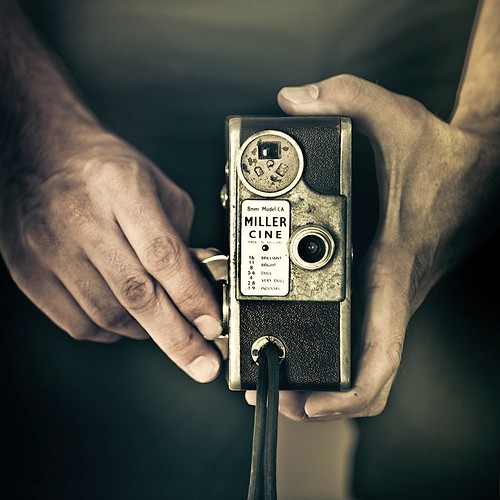
Photo Credit: celtics baby clothes
If you really want to learn the art of wildlife photography, then you should be aware of the basics of wildlife photography. It is rightly said that wildlife photography is one of the most challenging but rewarding hobby or career. It takes honest practice, persistence and hard work to master the real art of wildlife photography.
For mastering wildlife photography you have to have the basic knowledge of camera handling. As majority of the photos you take will be captured with the help of telephoto lens. This will test your patience and dedication as you have to wait a much longer time for the animal to come in the range and taking right pictures through right angles before that wild animal leaves from the site. Many of the times the animals you want to shoot will be yards away from you so that you have to take your pictures with more precision and care with zoom lenses.
While shooting wildlife you always have to watch out for minute movements happening around you. And for that purpose you have to be attentive for the longer time. The sunlight also plays a very important role in taking these wildlife pictures. For this purpose your camera should have the proper adjustments according to the various angles of sunlight so that pictures will be much clearer without any fuzz.
Also wildlife photography is all about capturing a particular moment of the wildlife. It makes or breaks your photography style. Many of the best wildlife photographers out there are really skillful in shooting the exact speed and momentum of the particular animal they are watching. But to be the best wildlife photographer out there you should first master the basics and you can begin this process by starting to shoot your own home pets. If you learn to shoot their natural movements and habits in their natural style then you can say that you are ready for outdoor wildlife photography.
There are no shortcuts to learn the basics of wildlife photography. Rather you have to practice it religiously and with full devotion. You should have to pay a special attention to your cameras. You have to take care that your camera has a quick shutter speed which is very necessary to take more than one shot as you roam around the wildlife to take pictures. In this type of photography most of the times you have to follow your subject to shoot many pictures at a time in one shot. This process is mainly known as "panning" which consists of taking faster pictures in one snap as you mover closer to a particular animal you want to shoot.
Thus wildlife photography is all about your patience, persistence and shooting skill where you need to wait a longer time to take the perfect picture. But at the end of the day it is also the most satisfying art where you get the really thrilling and enjoyable experience to cherish for.
Whoever Said a Picture is Worth a Thousand Words Probably Didn't Use Positive Images Photography

photo source
Well I've come to terms with the fact I'm no Denzel Washington... and I'm okay with that. All I really wanted to do was to take some good quality pictures I could use as profile headshots for my internet businesses and for my business cards, brochures, etc. This was important since I had a deadline coming up that I needed pictures for.
Based on my photography needs, I had wondered was there a photographer where the average looking person can go to get reasonably priced, almost "Star Quality" pictures taken. Also, I preferred that they were local too because I wanted a photographer that I could do business with again on future projects. Just imagine my delight when I found out that there was such a photographer located in Oakland at Positive Images Photography.
The owner is Gisele Bonds (no relation to Barry) and she not only consulted with me on the objectives of my project, she also happened to be a pleasure to talk to. She is very knowledgable. She definitely won points when she suggested that I go home to retrieve a few darker outfits to round out my photoshoot after I mistakenly arrived with all lighter colored outfits. She then explained why and how the darker colored outfits could be used to my advantage in the photoshoot.
As we took pictures she instructed me to pose at various angles and again she told me why those angles were important based on the numerous ways we discussed I could to utilize those pictures in my marketing mix. For instance, some of my pictures were taken with my business' branding in mind so that my company's logo or other images could be easily incorporated into those pictures. Nice!
For someone who's camera shy, I can honestly say I did enjoy Gisele's professionalism and creativity. After what felt to me like a thousand pictures and almost an eternity, we finally finished! At that point my mind started thinking, I hope these pictures look okay. I have to admit, I felt a little self-concious about the prospect of seeing the finished product because I have like many people, facial blemishes. When I mentioned this concern to Gisele she said not to worrry the pictures are going to look good.
Gisele invited me to come in and take a look at all the pictures we took and choose the ones I wanted. She gave me some positive feedback that was helpful and then I selected my favorites.
Later, when I received my Picture Disc I was happy to see that she was so right, my pictures did look good and my facial blemishes were gone... at least in my pictures! Interestingly, I'm told her specialty is working with high school aged students. Her studio is filled with with a plethora of graduation and prom pictures, etc.
She mentors students by providing intern opportunities at her studio and one of her past interns who is in college currently, still works at the studio which to me says alot about the kind of person Gisele is. I think that Positive Images Photography is aptly named and if you're looking for high quality photos, Gisele is the person you need to see. You may soon find that your pictures will be worth much more than a thousand words if you do!
Saturday, February 26, 2011
Amazing Secrets of Underwater Photography

credit,credit
Do you like underwater photography? Do you want to know how it is done and what are the different things you should look out for when taking underwater pictures? Then you have come to the right place to learn what really underwater photography is. We all know that underwater photography can be a great fun and enjoyment activity and it can be more enjoyable experience for you if you really know all the nitty-gritty about underwater photography.
If you want to take beautiful underwater pictures then most importantly you should have a powerful digital camera which can work underwater without any hassles. Because it is not like that you go underwater and immediately start taking pictures. Rather you have to take care of many things when taking pictures in the deep water. If you do not take enough care then your pictures can become blurred and quality can be compromised. You should always look out for the direction of the sunlight underwater as sunlight travels differently in the deep water which affects the picture quality. You have to adjust your camera angle properly with the direction of the sunlight when you are underwater.
Then there is the impurity in the ocean water like mud and dirt which can really affect the picture quality underwater. This dirt can make the water so impure that you can not see properly in the deep water. But this happens most of the times only in the lakes and rivers. But many of the oceans are so clear and pure that you can see longer distance without any problems and your pictures most of the times comes as a quality product.
Many people who try underwater photography; takes their own friend's and families pictures and this can be more entertaining and really memorable experience for the family members to cheer for long time. But one of the most important factor every underwater photographer should remember is that the underwater currents and their effects. It is the most unpredictable factor which really affects our picture quality when you are underwater. When you are underwater it is extremely difficult for everybody to stand still in the same pose. And with the dynamic nature of underwater currents it becomes more difficult to give the still pose for the photo. So you should always keep in mind the direction of the underwater currents while taking pictures.
With the advancement of different types of digital cameras it will become easier in the future for us to take underwater pictures and really enjoy the experience of underwater photography.
Using Depth of Field for Photography

credit
It's one of the greatest tools available to photographers, it's easy to use, and yet it's among the least known and used abilities of a camera today. Pro photographers have used it for decades, but the amateur can use these same techniques without paying the professional price. It's called depth of field, and it's accessed through the use of the aperture.
The aperture, simply put, is the hole that light comes through in your camera. Light passes through the front of the lens, through a series of glass pieces, through a hole at the back of the lens, and into the camera. The aperture is the hole in the back of the lens, and you get to control this vital part of the camera, if you decide to want to bump up your pictures. You can place the camera on auto, and the camera will adjust its aperture, shutter and more to the situation it sees. By placing the camera in more manual modes, you take on powerful and personal control, and YOU get to decide what you want to create with your photographs.
An important factor here is lighting. Any photography relies heavily on the lighting that you are using, whether it be from the natural, ambient light around you, or artificial light, like a strobe or other flash unit. Especially while using natural light, it will be important to use a tripod to keep the camera steady while shooting. If you are shooting on a cloudy day, without much light, then the camera must compensate for less light by having a longer shutter speed, which it will do automatically in the mode I'll be explaining in a moment. A longer shutter speed means the camera won't be able to have a clearly focused picture without the use of the tripod.
Depth of field simply means the area of focus, or the area in the picture that is in focus might be a more accurate term. Photography is a two dimensional medium, having height and width, but it lacks depth, the third dimension. Your photography can create the illusion of that depth through a few easy camera settings. You may be asking yourself, why would I want to create the illusion of depth, and what is it good for? Part of the reason is to create a sense of emphasis. When you take a picture of a large area, with trees, birds, squirrels, people, rocks, etc, what is the thing or object that you are zeroing in on? Is there anything that you really want to emphasize to your viewer? If so, it's probably getting lost in the crowd of other things on the scene. The squirrels are so small you can barely see them, the people are walking their dogs, and the trees are swaying in the breeze. But what if you wanted to focus on the viewer on the flowers in the garden? When you create emphasis on an object, it strengthens your photo, and actually guides the eye of the viewer to that object. You could take pictures to create a story about that, as you can read in my article about photo stories. When you get in to take close-ups of the flowers is where the possibilities of great photography begin.
Emphasize the garden by focusing in on one or two flowers at a time. Grab a tripod, get down to eye level with them, and then get ready. Place your camera in a mode that allows you to change your aperture; the mode is usually called "A", or "AV" on some models. Film cameras can allow these changes too, on SLR models. They require you to simply change the f-stop manually on the aperture ring. On your digital camera, use your selector buttons to change your aperture. You'll see on your digital camera, most likely, a letter f, with the number on the readout on either the monitor, or the info panel on the top of the camera, or perhaps both areas. The f means f-stop, which is the name commonly used to describe the number of the aperture setting. The best way to emphasize a flower is to have only that flower in focus, and to have the rest out of focus. Change your aperture to a really low number, such as 2.8, 4, or 5.6. When the lens is at a low number like this, the lens hole is wide open, but it is creating a small area or depth of field; basically an inch or two will be in focus. Focus your camera, and shoot. Now, look at the camera, and look at your pictures. The one or two flowers should be in focus, but do you see how the background is fuzzy and out of focus? This is what is called a "shallow depth of field", and that comes from using a small number f-stop. That's because you've taken control of your camera, and changed the outcome! Because only the flower is in focus, and the rest is blurred out, you have guided your viewer to what YOU want to emphasize! You have used one of the most powerful tools available for a photographer to bring a new focus to your pictures. Try this with a lot of different scenes; look how the item is forced to really stand out for you because it's the only thing in focus.
Now, on the opposite end of the spectrum are the pictures that have the entire photograph in focus; such as a lighthouse standing out from the beach, with horseshoe crab shells in the immediate foreground. This is also done by changing the depth of field of your camera. Here, you again change your aperture, but this time place it on a high number like 16, 22, 28, etc. This is to create a large depth of field by using a small hole in the back of the lens. Again, you must use a tripod to keep the camera steady. Take a picture with something in the near foreground, such as a rock or the crab shells, and then compose your picture with a mountain or some other object some distance away, focus, and shoot. Remember to use the rule of thirds here for additional emphasis. As you'll see, both areas should be in focus, again showing the third dimension and creating the illusion of depth. This is a large depth of field.
It's a little known tool in the photographer's toolbox, but almost any camera made in the past four years will have some sort of ability to work with depth of field, whether they have a point and shoot or DSLR. Every photographer, of every level, has the ability, through practice, to create beautiful photographs that can rival those of the pros, by using the tools available with every camera. Use the strength of depth of field when you create the third dimension in your photographs, and add a new and incredibly
powerful personal dimension to your photography.